

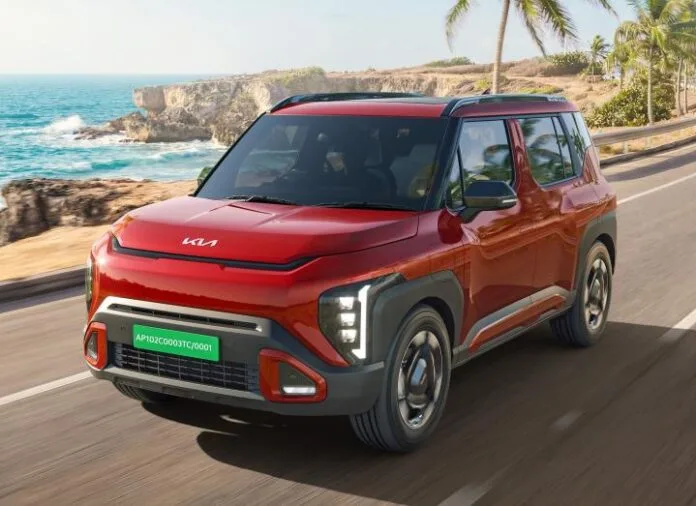
The structural evolution of the Indian automotive landscape has reached a definitive turning point where electrification is no longer confined to experimental niches or premium toy garages for the ultra-wealthy. Instead, the real battleground for volume and market dominance has shifted squarely into the sub-four-meter space, a segment that traditionally dictates the buying habits of the country’s massive middle-class demographic. For years, domestic manufacturing heavyweights have held a firm, nearly unshakeable grip on this entry-level electric crossover category, leveraging first-mover advantages to establish an early monopoly. However, the dynamics of this cutthroat ecosystem have been permanently disrupted with the official unveiling of the highly anticipated Kia Syros EV. This new entrant represents a sophisticated, deeply calculated assault on the mass-market electric vehicle segment, arriving with a clear strategic mandate to redefine consumer expectations regarding range, performance, and long-term ownership security.
What makes this particular vehicle introduction so critical for the broader industry is not merely the addition of another body style to showroom floors, but the specific engineering priorities that guided its development phase. Rather than treating electrification as a secondary compliance exercise by haphazardly stuffing cylindrical battery cells into an existing internal combustion engine chassis, the designers have comprehensively overhauled the underlying architecture to maximize volumetric efficiency. This vehicle directly addresses the core psychological barriers that have historically throttled mass-market electric car adoption across metropolitan hubs and tier-two cities alike. By systematically targeting the historical pain points of space utilization, thermal instability, and charging infrastructure compatibility, this vehicle establishes a highly aggressive benchmark that forces competitors to look beyond simple feature additions and focus on fundamental hardware optimization.
The broader market implications are immediately clear as pre-bookings officially commence across the nation. The entry of a major global player into the affordable, high-range electric vehicle segment injects a massive dose of healthy competition into a market space that was dangerously close to stagnation. Buyers are no longer forced to accept compromised real-world driving ranges or cramped rear-seat packaging as the inevitable cost of moving away from fossil fuels. Instead, the introduction of this highly advanced sub-compact crossover signals a new era where entry-level clean mobility options must stand toe-to-toe with traditional internal combustion engine vehicles in terms of pure usability, build quality, and cross-country touring capabilities.
Breaking Down the Architectural Blueprint and Battery Tech

At the absolute physical core of the vehicle’s market-disrupting proposition is a sophisticated, highly optimized high-voltage battery architecture that sets a new structural standard for sub-four-meter vehicles. To cater to widely varying consumer budgets and daily driving duties, the vehicle arrives in the market utilizing a tiered energy storage strategy split across two distinct battery capacities. The standard range variants are equipped with a robust forty-two kilowatt-hour pack, which provides an exceptionally competitive energy footprint for daily urban commuting and regional highway runs. For buyers prioritizing long-distance cross-country touring, the extended range models are packed with a massive fifty-one point four kilowatt-hour energy storage system. This represents the very first instance where a vehicle operating within this compact footprint has managed to break past the critical fifty kilowatt-hour barrier without entirely sacrificing precious cabin legroom or cargo volume.
The chemistry chosen to power these energy cells represents a highly deliberate engineering choice designed to balance raw energy density with consistent performance stability under heavy load cycles. Both battery options utilize high-grade Nickel Manganese Cobalt chemistry, a formulation widely celebrated for its superior specific energy metrics compared to traditional Lithium Iron Phosphate alternatives. By opting for this chemistry, engineers managed to cram a significantly higher number of watt-hours into every square centimeter of the underfloor battery tray. This high energy density is precisely what allows the extended-range model to achieve its headline-grabbing, segment-best certified range of five hundred and twenty-six kilometers on a single charge. Even the standard forty-two kilowatt-hour variant delivers a highly reassuring four hundred and forty-three kilometers of certified range, effectively banishing the ghost of urban charging anxiety for the vast majority of weekly commuters.
The structural integration of this battery pack within the monocoque chassis is a masterclass in modern automotive packaging. The entire cell array is enclosed in an ultra-high-strength, structural protective casing that boasts an IP67 water and dust resistance rating, ensuring absolute isolation from external road hazards. The floor-mounted position of the heavy battery pack lowers the overall center of gravity significantly compared to its internal combustion engine sibling. This structural choice vastly improves high-speed directional stability and reduces body roll during aggressive cornering maneuvers, turning a packaging challenge into a distinct dynamic advantage on the road.
The Engineering of the High-Voltage Drivetrain and Performance Metrics
Translating that stored chemical energy into smooth, immediate kinetic propulsion requires a highly efficient, front-mounted permanent magnet synchronous electric motor setup. In its extended range configuration, this advanced motor pushes out a commanding maximum power output of one hundred and seventy-one horsepower, combined with an instantaneous peak torque rating of two hundred and fifty-five Newton-meters. These performance metrics instantly position the vehicle at the absolute top of its class, yielding a power-to-weight ratio that completely eclipses its immediate segment rivals. When a driver buries their right foot into the accelerator pedal, the vehicle responds with an immediate, linear surge of acceleration that can propel the sub-compact crossover from a dead stop to one hundred kilometers per hour in a sports-car-rivaling eight point one seconds.
The transmission of this power to the front asphalt is governed by a highly advanced, column-mounted shift-by-wire selector mechanism that completely deletes the traditional mechanical linkage running through the center console. This electronic power management allows the vehicle’s onboard computers to meter out torque with millisecond-level precision, effectively preventing front-wheel spin during damp road conditions or aggressive launches. For driving environments that require varying levels of driver engagement, the vehicle features steering-wheel-mounted paddle shifters that do not change mechanical gears, but instead allow the driver to modulate the regenerative braking intensity on the fly. Drivers can toggle through multiple aggressive regeneration maps, culminating in a highly optimized i-Pedal single-pedal driving mode that can bring the vehicle to a complete, smooth stop using only the regenerative drag of the electric motor, thereby harvesting maximum kinetic energy back into the battery pack during stop-and-go city gridlock.
To ensure that this immense performance capability remains entirely manageable under emergency situations, the vehicle is equipped with an all-wheel disc brake configuration as a standard engineering inclusion across the entire lineup. This is paired with an electronic parking brake system that features a highly convenient auto-hold function, preventing unwanted vehicle roll during steep incline starts. The integration of the mechanical friction brakes with the electronic regenerative braking system is remarkably seamless, utilizing a smart electronic brake booster that balances deceleration forces to provide a firm, progressive, and highly predictable pedal feel that builds immense driver confidence at high highway speeds.
Thermal Management and the Challenge of Indian Climates
Operating a high-density Nickel Manganese Cobalt battery pack within the harsh, hyper-variable environmental conditions of the Indian subcontinent represents one of the greatest engineering hurdles in modern automotive development. Ambient temperatures can easily swing from near-freezing levels during northern winter nights to a brutal, blistering fifty degrees Celsius during peak summer afternoons. To prevent catastrophic thermal runaway, maintain consistent charging performance, and preserve long-term cell health under these extreme cycles, engineers have developed a highly advanced, fully integrated liquid-cooled thermal management system that operates continuously behind the scenes.
This sophisticated cooling layout utilizes an intricate network of internal cooling channels running directly beneath the individual cell modules, circulating a specialized glycol-based coolant fluid to pull excess heat away from the core during high-speed highway cruising or intensive fast-charging sessions. Before the vehicle even hooks up to a high-voltage public charging station, the onboard navigation system coordinates with a smart battery-conditioning system. If the vehicle is routing toward a designated DC fast charger, the software automatically pre-heats or pre-cools the chemical cells to their absolute ideal thermal window while en route. This proactive conditioning ensures that the battery can safely accept maximum current the exact moment the charging nozzle is connected, preventing local overheating and maintaining a highly stable, flat charging curve throughout the session.
The vehicle’s robust charging architecture fully supports high-voltage DC fast charging up to a peak capacity of one hundred kilowatts. When plugged into a compatible public fast-charging grid, the fifty-one point four kilowatt-hour extended-range battery pack can be replenished from ten percent to eighty percent capacity in a remarkably brief thirty-nine minutes. For everyday domestic or office charging scenarios, the vehicle features a highly competent ten point eight kilowatt onboard alternating current charger. This system allows owners to comfortably top up the smaller battery option from ten percent to full capacity in exactly six hours using a standard wall-mounted box, while the larger, extended-range unit takes just over seven hours to achieve a full state of charge, making overnight replenishment effortless.
Inside the Connected Cockpit and High-Tech Screen Strategy
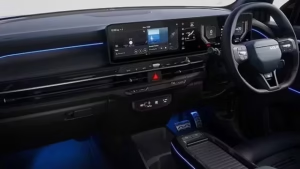
Step past the flush-fitting, aerodynamic automatic door handles, and the interior of the vehicle immediately reveals a dramatic departure from traditional mass-market cabin design, leaning heavily into a premium, hyper-digitized aesthetic. The absolute centerpiece of this modern cockpit layout is a massive, first-in-segment thirty-inch Trinity Panoramic Display panel that stretches effortlessly across more than half of the dashboard structure. This visually stunning, continuous glass interface seamlessly merges a twelve point three-inch customizable digital driver instrument cluster with an identical twelve point three-inch central touchscreen infotainment hub. The remaining real estate is dedicated to a specialized five-inch touchscreen panel located lower down, which acts as a permanent, highly intuitive control center for the fully automatic dual-zone climate management system.
The underlying software running this massive digital display matrix is the latest iteration of the Kia Connect 2.0 operating system, an advanced enterprise-grade platform that brings over ninety-five distinct connected car features directly to the driver’s fingertips. The system fully supports high-bandwidth wireless Android Auto and Apple CarPlay integration, allowing for seamless smartphone mirroring without a mess of tangled cables cluttering the open storage areas. The vehicle also introduces full over-the-air software update capabilities, ensuring that the drivetrain calibrations, navigation mapping datasets, infotainment interfaces, and safety assist algorithms can be continuously refined and updated remotely without requiring a physical visit to a local dealership workshop. Acoustic performance is handled by a premium, eight-speaker Harman Kardon surround-sound audio system that has been sonically engineered specifically for the acoustic properties of the electric cabin environment.
Space management inside the vehicle heavily prioritizes passenger comfort, utilizing the extended two thousand five hundred and fifty millimeter wheelbase to deliver exceptional second-row legroom that easily challenges larger vehicles in the next segment up. The rear bench seat features a highly practical sixty-forty split configuration that includes both sliding and reclining functions, allowing owners to dynamically balance passenger legroom against cargo demands based on the specific journey. Comfort is further elevated through the inclusion of ventilated bases and backrests for both the front seats and the rear outboard positions, a luxury addition that drastically reduces passenger fatigue during hot, humid summer journeys. Storage options are highly versatile, anchored by a generous four hundred and sixty-five liter main boot cavity that is complemented by a clever, clean sixteen-liter front trunk container under the hood, ideal for storing charging cables and portable accessories safely out of sight.
The Commercial Strategy: BaaS and the Lifetime Ownership Warranty

While delivering top-tier engineering metrics and premium cabin tech is essential, the ultimate success of an electric vehicle in a highly value-conscious market depends heavily on removing the financial anxieties associated with long-term vehicle ownership. Historically, mass-market buyers have remained deeply hesitant to commit to electric cars due to terrifying concerns regarding catastrophic out-of-warranty battery replacement costs and highly unpredictable residual resale values after five or six years of continuous use. To systematically dismantle these consumer barriers, a revolutionary corporate ownership program has been introduced alongside the vehicle’s physical launch.
The absolute anchor of this commercial strategy is the introduction of a highly disruptive Battery-as-a-Service financing model. Under this innovative framework, buyers can choose to purchase the physical vehicle chassis, premium cabin electronics, and mechanical safety systems at a drastically lower upfront purchase price, effectively stripping the immense cost of the high-voltage battery pack out of the initial vehicle loan. The customer then simply rents the battery pack from the manufacturer, paying a highly affordable, transparent operational fee fixed at a mere three point three rupees per kilometer driven. This model effectively lowers the initial financial barrier to entry, making the transition to electric mobility instantly accessible to buyers who were previously priced out of high-range options.
To completely eliminate any residual anxiety regarding long-term structural degradation of the chemical cells, the vehicle arrives backed by an unprecedented Lifetime High Voltage Battery Warranty that covers the original owner for up to fifteen consecutive years of vehicle operations. This historic warranty is further supported by an official Assured Buyback program managed directly by the manufacturer’s corporate finance wing. This program guarantees a transparent, locked-in residual asset value for the vehicle at specific age milestones, providing fleet managers and private family buyers with absolute clarity regarding their total cost of ownership and future trade-in potential from the exact day they drive out of the showroom.
Final Engineering Verdict: Redefining the Segment Benchmarks
The arrival of the vehicle into the fiercely competitive Indian market represents a massive, highly sophisticated step forward for the democratization of advanced automotive technology. It stands as a powerful testament to how rapidly the global electric vehicle sector is maturing, packaging five-hundred-plus kilometers of real-world touring capability, high-voltage fast charging resilience, and an ultra-premium connected cabin experience into an accessible sub-four-meter footprint. By refusing to compromise on critical engineering metrics like thermal cooling safety, passenger space versatility, and structural impact protection, this vehicle effectively transitions from a simple urban commuter choice into a legitimate, cross-country family vehicle capable of serving as a household’s primary mode of transport.
The long-term impact of this vehicle launch will likely echo across the design studios of rival car companies for years to come. By proving that advanced features like Level 2 autonomous driving assist functions, ventilated multi-row seating configurations, and highly flexible battery-rental monetization strategies can be successfully scaled for the mass market, this crossover has effectively permanently raised the bar for what an Indian consumer can demand from their vehicle. The era of accepting bare-minimum specifications in the name of clean energy is officially over. As charging networks continue to rapidly expand across major national highways through consolidated applications, vehicles engineered with this level of structural foresight are perfectly positioned to lead the final, decisive charge toward an all-electric automotive future.
For the modern automotive enthusiast, the technical purist, and the everyday family commuter, the vehicle represents a highly compelling, beautifully rounded package that removes the compromises historically native to electric vehicle ownership. It proves that clean, efficient, and sustainable mobility does not require a sacrifice in driving dynamics, stylistic presence, or everyday mechanical utility. As deliveries commence across the country, this advanced sub-compact crossover stands fully prepared to write the next great chapter in India’s ongoing electric transit revolution, proving on the open asphalt that the future of intelligent mobility has officially arrived.
EV Lovers , don’t forget to follow us on instagram @torquexpert.
Also see-



